
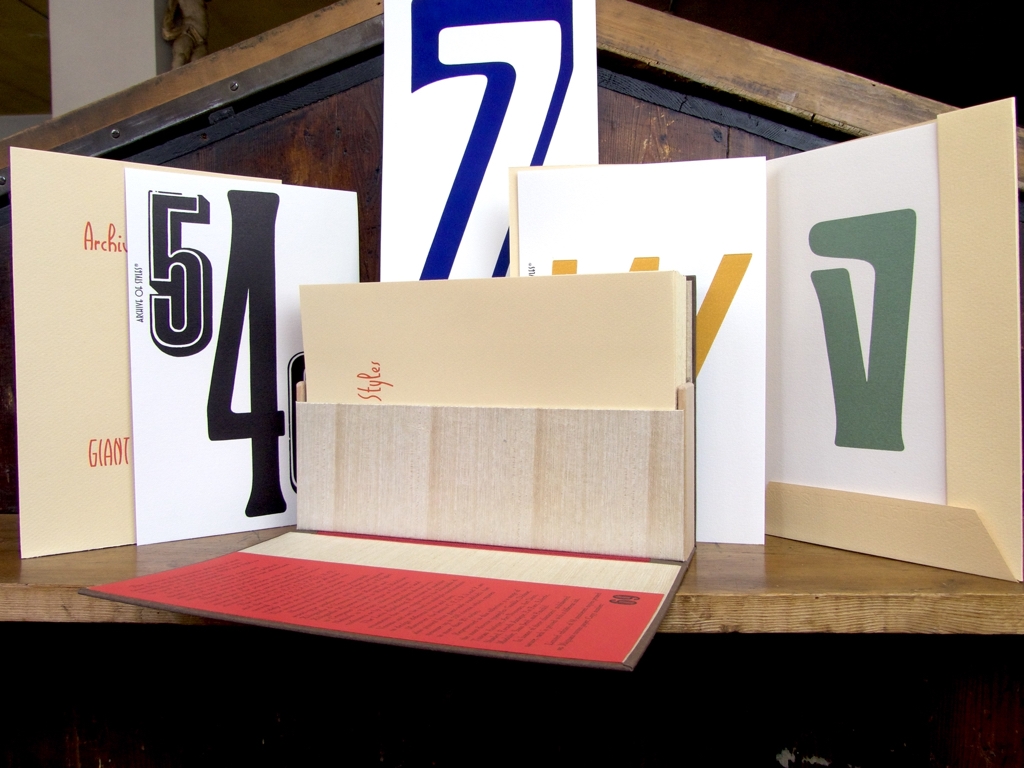
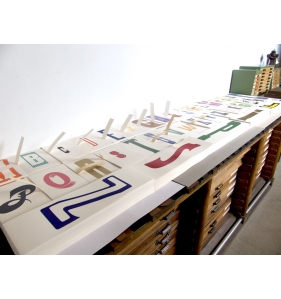
Portfolio of 39 loose prints.
This is the first boxed set of the “Archive of Styles - WOOD” series, and it is dedicated to big (up to 118 lines) Italian wood types.
The other two boxed sets are devoted to medium (up to 25 lines) and small (up to 10 lines) Italian wood types, respectively.
The present alphanumeric series (which combines letters and numbers, for a total of 39 characters) is printed from big and giant original wood types, which were handcrafted in Italy between 1850 and 1950 to be used on large broadsides.
In fact, for over a century, opera and theatre plays, circus shows and fairs, political rallies and new movie releases were advertised using these iconic typefaces.
Limited edition of 88 numbered copies printed on Magnani cotton paper.
 Complimentary gift wrapping and personalized message for the receiver available at checkout*
(*) no additional charge will be applied

Shipping costs calculated at checkout
Designed to grab attention with their vivid visual impact, the posters printed from wood types were pasted up in streets and squares, soon becoming a distinctive element of the Italian urban landscape.
The size of the type blocks in this set ranges from 20 to 118 lines, equivalent to about 9 to 50 centimeters

The letters C, D, E, G, I, L, P, Q, U, X, Œ, and the numbers 1, 2, 3, 8, 9, 0 are all hand-carved, as is the pointing hand, which was also widely used on playbills and posters. The remaining characters were cut by pantograph.
Numerous woodblocks come from prestigious wood-type manufacturers, such as Salvati (in Foligno), Xilografia di Verona (in Verona), Sante Marziali and Xilografia Milanese (both in Milan), Melchiori (in Crespano Veneto), Cerqua (in Giugliano), Nebiolo (in Torino); others were cut by local craftsmen or by the typographers themselves.


The letters C, F, I, P, S, and Z are also printed from giant-scale woodblocks that measure up to 118 picas (a pica is synonymous with a line), which equates to about 20 inches.
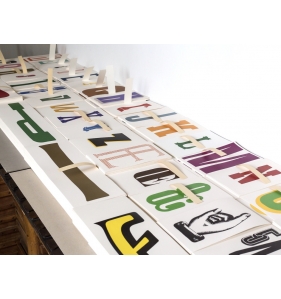
Represented in this collection is a range of the most diverse typestyles: Garalde, Didone, Tuscan Antique, Art Nouveau, Art Deco, Shaded, French Antique, Fat Face, Eclectic, Modular, Sans Serif, and Fanciful.
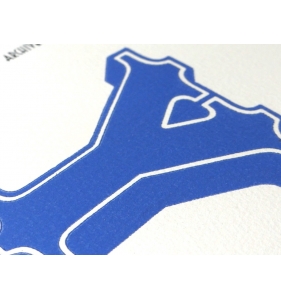
In honor of these characters’ multifaceted nature, each is printed with a different ink.
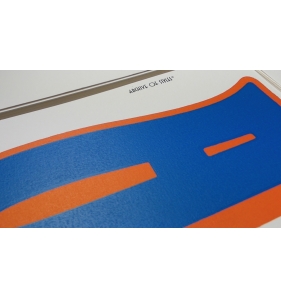
Damages on the face of the type are generally caused by woodworms. In the image below, some holes were plugged with light-color wood:

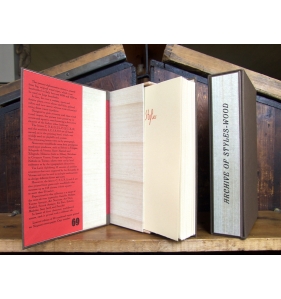
The series is housed in a boxed set (16x27x3 cm) whose exteriors are covered with woodgrain paper made in Japan. On the spine, the title “Archive of Styles - Wood” was printed from handset Mignon Halbfett, cast by Böttger Schriftgiesserei, Leipzig in 1909.
The text on the inside of the boxed set was printed from handset Paganini, which was designed by Raffaello Bertieri and cast by Nebiolo, Turin in 1927.
Finally, the title on the folders which contain the loose prints was printed from handset Serie Bengasi, a wood type cut by Xilografia di Verona in the 1930s.
These wood types are part of the historical assets of the Tallone Press (www.archiveofstyles.com).
***
Neither monotype nor linotype are used. These typesetting systems from a keyboard are often passed off as manual typography.
The Tallone Press does not print from plastic relief plates either. Derived from digital compositions, they are very much in vogue to simulate the effect of type impression onto the paper.
Printed on very fine paper, this collector’s edition is a sophisticated gift meant to last over time.
Portfolio of 39 loose prints.
This is the first boxed set of the “Archive of Styles - WOOD” series, and it is dedicated to big (up to 118 lines) Italian wood types.
The other two boxed sets are devoted to medium (up to 25 lines) and small (up to 10 lines) Italian wood types, respectively.
The present alphanumeric series (which combines letters and numbers, for a total of 39 characters) is printed from big and giant original wood types, which were handcrafted in Italy between 1850 and 1950 to be used on large broadsides.
In fact, for over a century, opera and theatre plays, circus shows and fairs, political rallies and new movie releases were advertised using these iconic typefaces.
Limited edition of 88 numbered copies printed on Magnani cotton paper.